Adding Inventory Items
Use this guide to create inventory items that you physically track in stock—either General inventory (supplies) or Medication inventory.
Working With Multiple Locations
First, if your practice has multiple locations, you’ll see a location selector in the header of the Charge Items page. This selector indicates which location’s inventory you’re currently viewing. Any category or charge item created while a specific location is selected will apply only to that location.
This helps keep pricing, reporting, and inventory rules accurate across sites. Switching the selector updates the list to show items configured for that location only.
Inventory Table
Go to Billing → Charge Items and make sure the Inventory items tab is selected.
At the top-right, click + Item and choose one of:
- Medication inventory
- General inventory

A right-side panel will open with fields specific to the selection.
Adding a Medication Inventory item
Fill in the item details:
- Medication: Type the medication name or Medi-Span code. If unit and strength are available, they will automatically populate.
- Compound medication: Turn this on for a compounded medication. It's identified by a SKU, and you list its Ingredients with a Dose and Unit for each.
- Item name: This field is prefilled with the selected medication, but you can update it if needed.
- Category: Assign it to an existing medication category.
- Low stock threshold: Optionally set a minimum alert.
- Batch information: Add lot number, expiration date, lot label, package NDC, manufacturer, and supplier.
- Inventory details: Enter the Stock in units.
- Markup: Use the category’s markup, apply a percentage, fixed amount, or none.
- Sales tax profile: Inherit from category, apply a custom profile, or select none.
- Dispensing preset: Optionally add Patient directions that fill in when you dispense this medication, and choose what prints on its bottle label under Include in bottle label.
- Price: Enter the Base price per unit or the Total wholesale cost of the stock. Enter either one and the other is calculated, and the Retail price per unit shows below them.

Click Save or Save and add more.
Adding a General Inventory Item
Fill in the item details:
- Code: Enter a SKU code, or click the button to auto-generate one.
- Item name: The name will be associated with all items with the same code.
- Category: Assign it to an existing general category.
- Low stock threshold: Optionally set a minimum alert.
- Batch information: Add lot number, expiration date, lot label, manufacturer, and supplier.
- Inventory details: Enter the Stock in units.
- Markup: Use the category’s markup, apply a percentage, fixed amount, or none.
- Sales tax profile: Inherit from category, apply a custom profile, or select none.
- Price: Enter the Base price per unit or the Total wholesale cost of the stock. Enter either one and the other is calculated, and the Retail price per unit shows below them.

Click Save or Save and add more.
How Items Appear In The Table
After saving, your new inventory items will appear under the Inventory items tab.
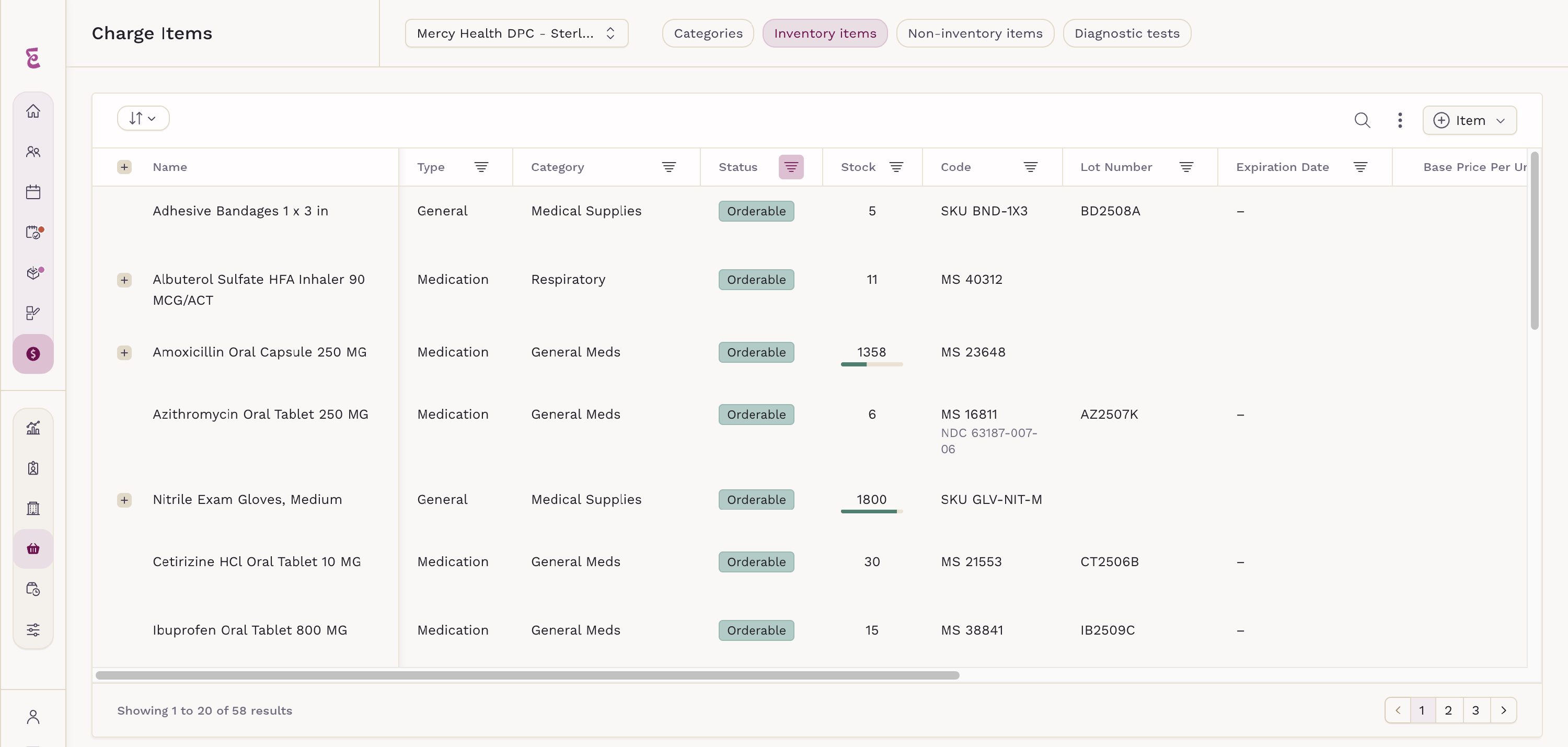
Each entry displays key details in columns such as Code, Lot Number, Expiration Date, Base Price per Unit, Markup, and Tax Profile. A lot's Lot label, when it has one, appears under its lot number.

For a compounded medication, click View ingredients under the item name to see its formula.

You can use the table filters — Type, Category, Status, Stock, Code, and Expiration date — to quickly search and organize your items.
Lot Number Behavior (applies when you add or restock)
- Different lot numbers within the same item: a new child row is created under the parent item.
- Same lot number within the same item: the new quantity is added to the existing child row. This keeps identical lots consolidated while maintaining batch-level traceability.
- Lot label: an optional name for the lot, such as its pack size, up to 50 characters. You can fill it in once a lot number is entered, and choosing an existing lot fills in that lot's label. The label is saved for the whole lot and shows next to the lot number when you pick a lot to dispense or add to an invoice. Bottle labels and invoice PDFs print only the lot number.
Tips
-
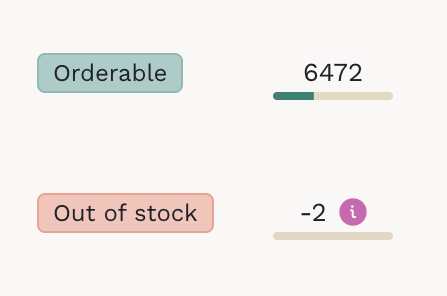
Set a Low stock threshold to receive timely alerts when it’s time to restock.
- Always enter a Lot number and Expiration date for medications to ensure safe dispensing and accurate audit tracking.
- Use Save and add more to quickly enter multiple inventory items in sequence.
-
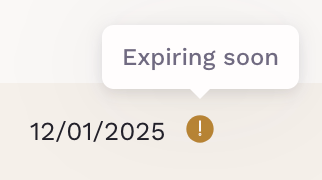
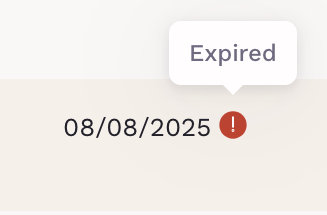
When an item is within 90 days of its expiration date, a yellow alert appears next to the date in the table. Once the item has expired, the alert turns red.